DOE pursuing legal actions on US-Israeli environmental damage
TEHRAN – The Department of Environment is following up on legal actions against the US and Israel for the serious damage they caused to the country’s natural environment in recent wars.
Outlining the dimension of environmental terrorism, Shina Ansari said the recent wars constitute a crime against the environment and ecosystem. “Wars practically render all global efforts to reduce greenhouse gas emissions futile and inflict irreparable damage on nature.”
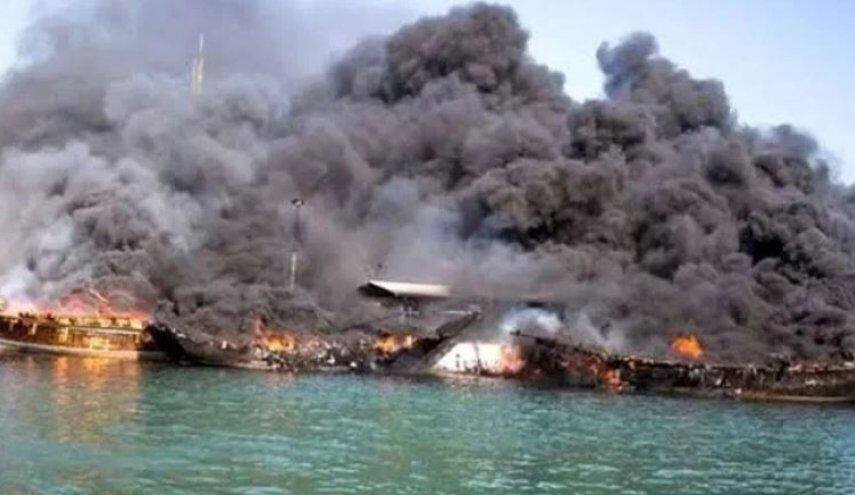
During the 12-day war, in addition to the destruction of environmental ranger stations, 13 protected areas sustained damage. The third imposed war posed threats to the country’s wetland and coastal ecosystems, as some coastal areas were affected by oil pollution, she noted.
“Before the outbreak of conflicts, we issued warnings to the international bodies and the UN Secretary-General regarding the fragility of the Persian Gulf’s semi-enclosed ecosystem; unfortunately, attacks on city centers, fuel storages, and peaceful facilities exacerbated the catastrophic environmental consequences,” Ansari added.
Censuring the approach of international bodies, she said that the reaction of the United Nations Environment Program (UNEP) was limited to issuing a neutral statement, without condemning the aggressors, inviting the parties to make peace, Ansari further noted.
Citing a report published by The Guardian on the carbon footprint generated during the first two weeks of the recent war, which equaled the greenhouse gas emissions of several nations, she emphasized that the persistence of such double standards by international bodies hinders environmental peace and stability. Ansari further noted that to preserve the environment, the world must seriously curb war as the most destructive force against nature.
She went on to expound on the long-term and enduring damage inflicted by war on Iran’s ecosystems, and announced the preparation of a legal and technical dossier to document environmental crimes and pursue the issue in international forums.
Warning that war-related environmental damage is often irreversible or takes a long time to repair, Ansari said: “For instance, the restoration and rehabilitation of the Persian Gulf’s unique coral reefs, which are damaged by oil pollution resulting from wartime attacks, could take decades, or even up to a century.”
The official noted that the documentation and economic assessment of the harms from the 12-day war have been concluded, while technical evaluations and the sampling of soil and marine ecosystems in the third imposed war are also being carried out instantly.
To ensure the reports are robust and well-documented for being presented to international bodies, the DOE is benefiting from the capabilities of domestic universities and the cooperation with specialized regional institutions, like the Regional Organization for the Protection of the Marine Environment (ROPME).
The official also highlighted ongoing diplomatic efforts to secure international cooperation, saying that following talks with UNEP, it was agreed that the organization would dispatch a technical team to Iran to conduct field monitoring of damage inflicted on the Persian Gulf ecosystem during the recent war.
She went on to say that all these efforts aim to compile technical-scientific reports into a well-substantiated dossier—aligned with international protocols—that enables the DOE to vigorously assert the country’s rights regarding ecosystem health and biodiversity in global forums.
‘Inaction exacerbates war impacts’
Addressing the ninth session of the Committee on Environment and Development (CED9) held from July 1-3 in Bangkok, Thailand, Ansari highlighted that remaining silent in the face of environmental destruction caused by warmongers is the same as accepting a threat that will, sooner or later, impact everyone.
“The environment is the first silent victim of war and the last to recover from its consequences. Nature does not recognize the end of armed conflict. Environmental destruction may continue to undermine human health, food security, water resources, and biodiversity for decades after the guns fall silent,” the official noted.
“When war targets the environment, the victim is not merely one nation—it is the shared heritage of humanity. Therefore, protecting the environment must become a common global responsibility; the aggressors must be held accountable for their crimes and provide full compensation for the environmental damage they have caused. Effective implementation of this principle not only serves justice for the affected State but also plays an essential role in preventing the recurrence of such devastation.”
The international community needs to recognize environmental security as an essential pillar of international peace and security. Lasting peace cannot exist without a healthy environment, and environmental destruction anywhere in the world can generate consequences that transcend national boundaries,” Ansari further noted.
The official urged the international community to strengthen international mechanisms to prevent environmental destruction during armed conflicts, assess environmental damage, document environmental impacts, ensure accountability of aggressors, and secure effective compensation.
MT/MG
Leave a Comment